Showing posts with label Scilly. Show all posts

Sunday, 23 August 2015

Scilly seabirds

This year's summer holiday was to the Isles of Scilly - mainly non-birding, but with three pelagics on the Sapphire on 10th, 14th and 16th August. And very good they were too! 

Things got off to a good start on the Scillonian out to St Mary's on 10th; I spent most of the trip seawatching, and part-way into the trip noted a juvenile skua sat on the sea less than 50m off the side of the boat. It looked rather slight and pale-headed, but as it skittered into flight, it flushed a 'black-headed' gull that was sat near it which I hadn't looked at properly. As the gull took flight, it flashed its unmistakeable wing pattern which took my attention away from the skua -  it was a smart adult Sabine's Gull. I reached for my camera, but remembered I'd left it back where we were sat... I dashed back for it, telling a few other birders what I'd just seen, but by the time we all returned to my position there was no sign of either the gull, or the skua (which I'm pretty sure was a Long-tailed). A while later, as we approached the Scillies, I then picked up a Cory's Shearwater cruising low beneath a group of Gannets at mid range; unfortunately I don't think anyone else managed to get onto this bird either, but I was pleased to get one given that this species has been pretty thin on the ground this year. 

The pelagics themselves produced a good range of species. Several Great Shearwaters showed extremely well on each trip; it is impossible, I think, to say how many were involved each trip, and I think reports of 9 or 10 from the trips I took were optimistic, as I'm sure some of the birds simply left and then rejoined the boat. But anyway, super birds; I also picked one up sat on the sea on the Scillonian home. Manxies, one Balearic and several Sooty Shearwaters also featured across the three excursions. 

Great Shearwater
Great Shearwater
Great Shearwater
Sooty Shearwater
Balearic Shearwater

And so on to petrels. There was no shortage of Stormies, which zipped across the chum slick each trip, although they were little blighters to photograph. Wilson's Petrels had, until my second pelagic, failed to show up this year (previously, the latest every first sighting off Scilly was mid July - the 17th I believe), but we had one that showed well for a few minutes, and then another, much briefer bird on my third trip. Great little birds, and my first in 15 years! But of course, the star of the show was the Fea's Petrel on the 16th...on which, more here

Storm Petrel
Storm Petrel
Wilson's Petrel
Wilson's Petrel
Wilson's Petrel
Wilson's Petrel
Wilson's Petrel
Fea's Petrel

Other bits and pieces on the bird front included several Bonxies and a single Pom Skua (a second summer bird), and a juvenile Black Tern. Each trip also included some shark fishing, and single Blue Sharks were caught, tagged and released on my first and second trips - stunning animals. A single Porbeagle Shark was also caught (but escaped before it could be got on board), along with a couple of little spurdogs.

What's been caught?
A Blue Shark
Blue Shark being tagged

Cetaceans also performed well, with Bottlenose and Common Dolphins and Harbour Porpoise logged on the pelagics, and the latter two seen on the Scillonian back to Penzance - in fact, a flat and glassy sea provided great conditions allowing plenty of each species to be seen, along with a single mid-sized whale which breached once and was probably a Minke Whale.  

Bottlenose Dolphins
Birding on the boat

Land-based birding was very limited. A walk round the perimeter of St Mary's one day produced 13 Common and 7 Green Sands and a smattering of Wheatears, and a Pied Flycatcher and three Whimbrel featured on our last day.

Birding on St Mary's

Tuesday, 18 August 2015

There's a Fea's on the starboard bow

(starboard bow, starboard bow...)

There's not much to add  to the finders account on the RBA website of the Fea's Petrel off the Scillies on Sunday... other than to say I was there and I saw it; an incredible encounter. I had actually just scanned onto the bird a moment before Bob Flood told us to 'get on this petrel' he had been watching - it was cruising straight towards us, low over the water, and all I could see were its large dark eye patches - it sure looked interesting! A moment before it turned, Bob called it as a Fea's; it turned, and it bloody was a Fea's - I couldn't believe it...

It stayed with us for several minutes before departing, at times showing down to just 10 metres or so. Quite incredible. The atmosphere on the boat was amazing, as I don't think most of us could believe our eyes - except perhaps Paul French, for whom this was his third Fea's in British waters in as many years (which I think is just greedy).

Unfortunately my DSLR had suffered from getting soaked in seawater on my previous pelagic and wasn't working properly, so I only had my bridge camera with me, which isn't exactly ideal for this sort of thing, but I still managed a few record shots which I'm quite happy with - although of course they're not a patch on those images obtained by the more seasoned pappers. 

What a bird - and not one I realistically  thought I'd ever get on my British list. And the views were better than I managed in Madeira last year!


A poor picture - but this is representative of  initial views as it approached the boat
Maybe only c.25m or so off the bow in this shot
Cruising one way...
... and the other
What a beaut.

Thursday, 30 October 2014

Scilly 2014

4th-11th of October 2014 saw the Stu Crew reunited for its third outing of birding, beer and pasties on the Isles of Scilly. After a fairly quiet 2013, hopes were high that this year would deliver... it didn’t, and overall our week was again quiet, both in terms of rarities/scarcities, and also for other migrants. The good news (for us) was that the following week was pretty quiet too (if not even quieter); there’s always that fear that something good will turn up the day after you’ve left. 

Carl and Stu feeling optimistic on the boat out

But here is what we did see:

Blyth’s Pipit

On 6th October news came over the radio of a ‘Richard’s or Blyth’s Pipit’ on the airfield. Later, this was ‘confirmed’ as a Richard’s Pipit. Being as we were at the opposite end of St Mary’s, we didn’t rush across to see it. But that night at the log, there seemed to be some doubt about the bird’s identity, and the following morning, it was reported as a Blyth’s Pipit, now in a bulb field at Old Town. This time we decided to check it out, but by the time we arrived, it had done a bunk. It later transpired that both Blyth’s and Richard’s Pipits had, apparently, been present the previous day, which had caused the confusion.

We thought that was that, but the Blyth’s was relocated a few days later, on the 9th, behind Old Town Bay. After missing the bird fly on a flush of Standing Stones Field (we weren’t the only ones), we eventually had flight-only views of it on a flush of the small fields behind the bay, when it gave a quiet ‘chip-chip’ call; probably not tickable views if this was a new species for anyone, but luckily all three of us had seen one before (me, the Languard bird in the ‘90s, the other two the Gringley bird).

Blyth's Pipit twitch

Our only BB rarity of the weekend; and it wasn’t seen again.

Barred Warbler

Things actually got off to a good start on our first full day, when, strolling towards Old Town from Hugh Town with Stu, I noticed a pale Sylvia warbler on the edge of a Pittosporum hedge near the health centre. It was a bit distant for bins, but looked interesting. Getting the scope on it, it proved to be a Barred Warbler. It actually showed pretty well, and we managed to get plenty of people onto it, including Carl who’d had to go to the Co-op to buy a toothbrush.

Barred Warbler

Still present after we left, this bird was presumably the one that was seen previously in the allotments, just a few hundred metres away as the warbler flies. However, on the basis that it hadn’t been seen for six days, it counts as a self-found bird under Punkbirder rules. Boom.

Rose-coloured Starling

A juvenile had been hanging out at Green Farm, Pelistry for a while, and after a failed attempt on the 6th, we tracked it down on the 7th (after a bit of stringing on my part). Only my second British bird, it showed well as it fed around some cattle.

Rose-coloured Starling
With its buddy
Carl searching hard for the Starling... or is he picking blackberries?

Red-breasted Flycatcher

A birthday treat on the 8th, this elusive bird showed along the bath between Porth Hellick and the Tremelethen Trail - although the other two almost gripped me off; I had wondered off to look for the bird elsewhere (after it hadn’t shown for a good 40 minutes), and when I came back, I thought they were joking when they said it had shown 20 minutes previously. Luckily I picked it up again a few minutes later...

Looking down onto Porth Hellick 

Short-toed Lark

Having dipped this bird on the airfield on the 10th, we went back for a second try on our final morning on 11th. Initially there was no sign, but Carl picked it out in flight, and we then had pretty good views of it on the deck, along with 4 Skylarks.

Short-toed Lark

Balearic Shearwater

Due to pretty choppy conditions on the sailing out of Penzance, seawatching wasn’t exactly easy, and despite spending most of the sailing looking for seabirds, we failed to see a definite Balearic Shearwater – although did have c.10 Manxies and 6 Bonxies. On the sailing back, however, conditions were much better, and we bagged two nice Balearic Shears, as well as another 4 Bonxies. No Grey Phals unfortunately though - some had been seen on the morning sailing from Penzance.

Balearic Shearwater 1
Balearic Shearwater 2

Other birds

The supporting cast included a couple of Yellow-browed Warblers (in fact, apart from a regular bird at Newford Duck Pond, the only other one our group encountered was a bird I had briefly in a hedge near Borough Farm), quite a few Firecrests (we seemed to stumble on these wherever we went), 3 Snow Buntings (2 on Peninnis, one on the airfield), up to 3 Whinchats at Higher Moors, the odd Spotted Flycatcher, and a single Redstart. Other warblers etc. were in very short supply.

Firecrest
Stu and a Wheatear
Song Thrush - marvelously common on Scilly

The ones that got away

On the 9th, a Rustic Bunting turned up on St Agnes. Carl decided to go and look for this the following day, whilst me and Stu stayed put on St Mary’s. Unfortunately it wasn’t relocated, although an Ortolan Bunting was; a would-be tick for Carl, and for me! I’d like to say that I felt bad for Carl that he didn’t see it...  A Tawny Pipit (or was it a Richard’s..?!) also put in a brief appearance whilst Carl was on Aggie, but he only had brief tail-end views of it as it flew off.

Non-birding highlights...

Less snoozing – there was a lot of snoozing last year. This year, Carl didn’t go back to the flat once for an afternoon snooze, and Stu only did once. That said, there was a bit of snoozing whilst out and about, and definately lots in the evening...

Snoozing in Old Town churchyard
Meeting some birders from the West Midlands, especially Richard and Kay - some kindred inland-birder spirits; Kay was the first person we got onto the Barred Warbler, and Richard relocated the Blyth’s Pipit.

Snoozing in Holy Vale

Winning the quiz in the Atlantic - after a traditional birthday lasagne (can something be traditional when you’ve only done it twice?), we took part in the quiz, bolstered by a couple from South Yorkshire who we had met last year. And our team, ‘Happy Birthday Nick Crouch’ (I had no part in choosing that name, I would like to point out), won, quite comfortably! And beat the West Midlands birder’s team, ‘Peregrines on Toast’ in the process. But we promised not to mention that again... Our team of five won... four pints of beer. Hmm.

Snoozing on the boat

Hustling some Irish navvies - one night in the Mermaid, we were playing pool, and got challenged to a game of doubles by some Irish lads working at the airport (which is currently being redeveloped); having seen us play a couple of unconvincing games, they obviously thought they could take us, but they hadn’t banked on Stu pulling off an amazing shot to snatch victory from the jaws of defeat. They looked a bit deflated at the end...

Snoozing in the flat - when we're meant to be going out!

... and lowlights

Arriving at the wrong Travelodge in Okehampton - we began to check in, only to find that we were needed to be at the other Travelodge in Okehampton, 10 minutes back the way we had just come. Not a big deal perhaps, but not great when it’s nearly midnight and you’ve got to get up before 6. I blame Carl.

Next October?

During my three visits to Scilly in the last three autumns, I have had just two ticks – and one of those was Rose-coloured Starling; and in the last two years, there have been just single BB rarities during our week stay. In fact, this must be one of the worst autumns on record for Scilly. So the question is, is this a good enough return, or should I be casting my eyes north next year...? Scilly is lovely and I have a great time there, so it will be a big decision to make! 

Scilly looking lovely - Old Town Bay from Peninnis

Tuesday, 15 October 2013

Scilly 2013

Featuring the “Stu Cru”:

Stuart ‘dull’ Davenport

Carl ‘invisible’ Cornish

Nick ‘man up’ Crouch


Day 1 – 5th October

The as-yet un-named Stu Cru arrived on St Mary’s after an uneventful, but woefully overpriced flight from Land’s End. After dumping our bags, we headed out onto Peninnis Head and on to Old Town, then Newford Duckponds, before heading back to Hugh Town via Porthloo. After a quick pit stop, we went out again, looping round through Lower Moors and the Dump Clump.

Old Town Bay from Peninnis

Best birds were Arctic Warbler at Newford (pretty elusive), a couple of Spotted Flys at Maypole, and the Purple Heron in flight over Lower Moors, but we couldn't find the Bluethroat at Higgo’s Pool. Other birds during the day included Redstart, Whinchat, Lesser and Common Whitethroat, plenty of Wheatears, and a Med Gull.

Distant Purple Heron over Lower Moors

That night saw the first of several/many visits to the Mermaid; it was here that the Stu Cru acquired its name after discussions about birding on Shetland and inappropriate use of the word ‘crew’, and then had a fateful encounter with some local Scillonians (who will remain nameless for the sake of all concerned). It was during said encounter that the members of the Stu Cru then acquired their pseudonyms, and yours truly beat a reigning world champion gig racer at an arm wrestle (we’ll ignore the fact she was a girl).


Day 2 – 6th October

We began our day at Old Town Church, where Carl found a Yellow-browed Warbler, I dipped a Firecrest, and we also had a Pied Fly. We pulled in the Purple Heron, decked in a field next to the school, and then headed towards Porth Hellick, ticking the Turtle Dove at Porth Minnick and a Lapland Bunting on the airfield. At Higher Moors, I had a heard-only Yellow-brow on the Loop Trail, but the little blighter remained hidden. 

Purple Heron lurking
Entertainment during a stop at the Old Town cafe

Me and Stuart then worked our way slowly up Holy Vale (I think Carl had gone home for a snooze by this point – hardcore), which paid dividends, first for me with a ‘new’ Yellow-brow, and then better for Stuart with a Red-breasted Flycatcher, which he beckoned me over for whilst I was trying to pin the Yellow-brow down for a photo. The RBF was extremely elusive, but eventually showed briefly for the assembled crowd which materialised surprisingly quickly, given that we’d barely seen another birder over the preceding couple of hours.

Continuing on, we found another flycatcher, this time a Pied, between Holy Vale cottages and Maypole, and then had brief views of the Wrynecks at Borough Farm. A Spotted Fly on Telegraph Road made it a three-flycatcher day. Lower Moors produced a Jack Snipe from the ISBG hide, and as we passed by Old Town Church we had what was probably another Red-breasted Fly zip past us, but it quickly vanished – one had been seen in this area earlier.

The boys in Lower Moors

Our evening meal was taken in the Bishop and Wolf, where fate saw us pitch up on the table next to three of the group we had encountered the night before – all looking slightly sheepish. A more civilised conversation ensued, where they realised that Stu wasn’t actually that dull. We also went to the log.


Day 3 – 7th October

Beginning at Lower Moors (no sign of the Spotted Crake on Shooters), Carl located a Whinchat on Standing Stones field (bird of the trip for Carl), and we then had Pied and Spotted Fly at Old Town Church. There were a few waders at Porthmellon, and on the golf course we found a new Lapland Bunting (gripping off a fellow Notts birder in the process who’d just come from that way), and for Carl’s benefit, two more Whinchats.

Lapland Bunting checking out the greens 

Another amble down Holy Vale produced what was presumably yesterday’s Yellow-brow again, which soon melted into the willows, and a tree-feeding Acro only seen briefly (no doubt a Blyth’s Reed). What was a rather quiet day was completed at Higher Moors, where we had another Yellow-brow at the pumping station end.


The only picture I could manage all week of a Yellow-brow

During the day there had been a brief sighting of a Grey-cheeked Thrush at Old Town Church; apparently the bird was seen on a gravestone, but by the time the observer had turned to reach for his camera, the bird had gone (and wasn’t seen again during our time on the island... although it has subsequently been relocated!).
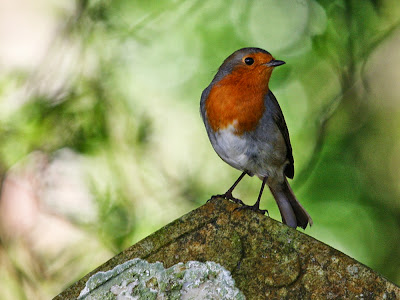
Not a Grey-cheeked Thrush on a gravestone

The Mermaid was our pub of choice for tonight’s meal, which passed without event, excepting that on the walk home Stu’s wookie got a high-five. 


Day 4 – 8th October

I made an early start at Shooters Pool, later joined by Carl who’d failed to set his alarm correctly (which I had guessed was the case as I left the flat judging from what sounded like the distant thunder emanating from his room). We eventually enjoyed decent views of the Spotted Crake, although not before we’d witnessed some good stringing of Water Rails in its place. Onwards to Old Town Church, we had Red-breasted, Pied and Spotted Flys in the space of an hour.

Porthcressa

Leaving Carl in the flat (I can’t remember what the reason was this time?), Stuart and I had a walk onto the Garrison, seeing the Yellow Wag on the football pitch but not much else of note. Whilst we were there, news came through of an Olive-backed Pipit at Porthloo Duckpond. We were in no rush to see this, but Carl (once he’d stirred himself), made his way expectantly there, looking forward to a tick.

A black bird on a white wall

When we arrived, the bird hadn’t been seen for a while, and Carl expressed his doubts about the bird’s identity. Having a look on the back of a photographer’s camera, it was clear that if it was an OBP, it had a very plainly marked head… Over the next hour and a half or so, the bird showed briefly once, and then again (albeit partially obscured for much of this time). By now Filby had arrived, and as soon as the bird did show in the open, it was a relief that he proclaimed it over the radio as… a Tree Pipit, a conclusion which I think Carl had already come to about two hours earlier.

The 'Porthloo Pipit', looking very unlike an OBP
Carl meditating on the finer points of pipit ID

After all that excitement, we had a saunter through Lower Moors (Purple Heron in flight again), before finishing at Old Town Church. Another fairly quiet day…

Purple Heron, closer this time

Supper was taken in the Atlantic, where I had a lasagne to celebrate my 33rd birthday, followed by the log, where much hilarity ensued when it came to Tree Pipit.


Day 5 – 9th October

We decided to have an off-island trip today, choosing Tresco, despite the fact that it was apparently ‘dead’. However, I pulled out a Red-breasted Fly in the woodland next to the Abbey; unfortunately neither Stuart or Carl (or anyone else) managed to get onto this, and I had to make do with a 5 second view - which was a shame, as this individual had a nice orange wash on its breast. However, the other two did hear a Yellow-brow in this area.

Bryher from Tresco

News then came through that a Sora had just been found on the Great Pool, from the Swarovski hide. We high-tailed it round there, and after a tense few minutes, the bird wandered out of the edge of the reedbed, and showed fairly well to the 10 or so of us who were on the island. We then vacated the hide before boats from the other islands started to arrive, failing to locate anything else of great note during our remaining time on the island, although 3 Whinchats got Carl excited, and we also had the resident Garganey, a Black-wit and 2 Skylarks.

Sora behind some reeds
Sora behind some more reeds
Sora almost not behind some reeds

Despite this being our one night in of the week, two of our number did make it out for the log – you can probably guess which of the Stu Cru didn't make it.


Day 6 – 10th October

Starting on Peninnis with a fly-over Lapland Bunting, Stuart then kicked a Short-eared Owl out of the heather, which promptly flew straight out to sea, where it was lost it in the light. Another was reported at about the same time in-off at the airfield, so hopefully this was the same bird – otherwise Stu is responsible for it having a long journey down to Spain (although it did have a nice tail-wind, as the wind had gone round to the north today after south-westerlies). 

The back end of a SEO

Lower Moors produced the Purple Heron, again, and continuing on to the gardens at Carreg Dhu, Stuart remarked that we needed a Firecrest to make up for the one I had missed at Old Town Church previously. Right on queue, a Firecrest hopped out into foliage above the track in front of us. We then had this, and a second bird, in Carreg Dhu, which caused a mini influx of Firecrest-twitchers. 

Firecrest trying to avoid being photographed, which it mainly succeeded in doing

Continuing on, we dropped onto a twitch for a Richard’s Pipit in a field next to Pungies Lane. The bird showed fairly well, although bizarrely when it flew off, most people were still watching something in the field… presumably a Meadow Pipit

Dick's Pipit
Twitchin'

On the way back down the island, we came across a very loud cricket, which Stu zeroed into on a bracken frond - a huge Great Green Bush Cricket.

What a monster!

We then decided to give the Bluethroat another go, enjoying close views of this confiding bird on the muddy path down to Higgo’s Pool. The light was poor so my pics don’t do it justice (high ISO, slow shutter) – it was a super-smart little thing.

Spot the Bluethroat
Bluethroat from the back...
... and from the side...
... and from the front

So, a better day, and with lots more Goldcrests around things were looking up?

After another meal in the Mermaid, we went to the Atlantic so Stu could catch the end of the quiz, and terrorise some local girls by feeding them answers and berating their spelling of English counties. Lincoinshire?!


Day 7 – 11th October

Our last full day; it was now or never for that Grade A Mega. Things looked promising as we made our way up onto Peninnis, with small flurries of Redwings overhead. Carl then almost stepped on the Snow Bunting which was feeding on the track – I think his words were something like ‘bloody hell it’s just here’. This bird, located yesterday, was completely fearless, allowing approach to just a few yards (yet I still failed to get most of my pics of it in focus). 

Snow Bunting
Having a stretch
It was even close enough for phone cameras

Further on, we had a Lapland Bunting and 5 Skylarks, our highest count of the week. News came over the radio of a Woodcock flushed at the northern end of the island. It looked like new birds were in.

At Porth Hellick there was a Jack Snipe on the pool, and a young Arctic Tern in the bay. Onward to Carn Friars, I had a Yellow-brow briefly, but Watermill was quiet. A Yellow-brow at Newford Duckpond was comparatively vocal (with most other birds this week being silent, or almost so). 

Stu, on-it at Newford

Carl then headed home (this time to do some gift shopping), leaving me and Stu to find a Firecrest at Trenoweth. Heading back home via the golf course, we then located a Redstart feeding along the northern edge; having hardly seen another birder over the last couple of hours, it was surprising that seven people popped up within seconds of Stu putting this bird out on the radio. 

A male Redstart which tried to look rare
And some Redstart twitchers

In Lower Moors, a Jack Snipe showed well on Shooters, and brief, final excitement came in the form of another tree-feeding Acro. Based on brief and obscured views, it looked like nothing more than a young Reed, but no doubt it was another Blyth’s Reed.

A Jack on Shooters

Our final night on the island was spent, once again, in the Mermaid (with a band in the Slip Bar), where we met our local friends once again, and made some new ones too.

And that was that. The Grey-cheeked Thrush came on the pager on our drive home, although having all seen at least one before we weren't too distraught - although where it had been hiding since monday is puzzling. Although that said, I for one never checked the overgrown path behind the monument...

Oh, and one last thing: check your vox button!